Explore high-precision cold-formed channels, stainless steel sheets, surface refinement technology, and fabrication machinery.
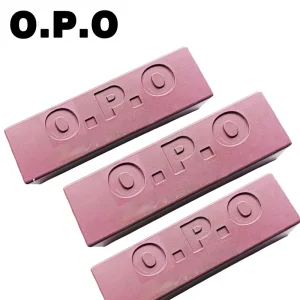
Professional Heavy-Duty Metal Polishing Compound for Surface Refinement
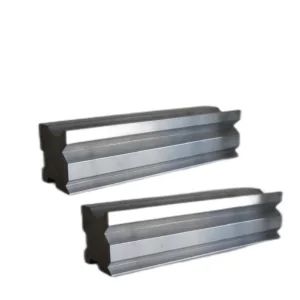
Metal Fabrication High-Precision CNC Press Brake Punch Tool Set Hydraulic Bending Die
General Industry No Deformation Fiberglass Flat Sheet Road Sign Plate FRP Board
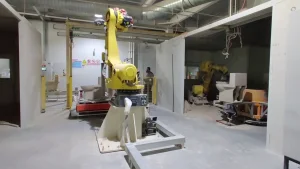

6-Axis Robotic Grinding for Steel Pipes with IP65 Full-Posture Compensation Industrial Grinder

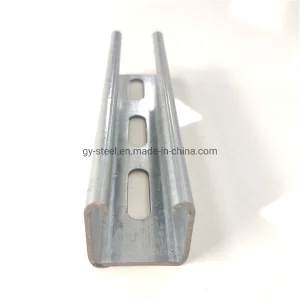
An engineering insight into structural channel profiles (C-Channels, UPE, UPN, PFC), section properties, load behavior, and material standard compliance across international projects.
Information Gain Summary: Channel sections—encompassing Hot-Rolled UPN/UPE profiles, Parallel Flange Channels (PFC), and Cold-Formed C/Z channels—form the structural backbone of modern civil engineering, modular construction, solar tracking frameworks, and heavy machinery chassis. Selecting a tier-1 exporter requires evaluating not merely raw ton price, but section modulus ($W_x, W_y$), torsional rigidity ($J$), yield strength consistency ($R_{eH}$), dimensional tolerance control (EN 10279 / ASTM A6), and anti-corrosion coating durability (ISO 1461).
Hot-rolled channels are manufactured under extreme temperature continuous rolling mills, yielding monolithic structural integrity. UPN (European Standard Tapered Flange Channels) feature a 8% flange slope, offering immense resistance to axial compression. Modern engineering increasingly favors UPE (European Parallel Flange Channels), which eliminate flange taper to simplify bolting, gusset attachment, and structural joint detailing while maintaining high section modulus to weight ratios.
Engineered from continuous hot-dip galvanized steel coils (such as DX51D+Z or S350GD+Z), cold-formed C-channels provide an optimized strength-to-weight solution for roof purlins, wall girts, and solar array mounting structures. Utilizing automated multi-stand roll-forming lines, manufacturers achieve custom lengths, pre-punched mounting slots, and stiffened lip geometry that dramatically reduce field assembly time and structural dead weight.
| Profile Type | Standard Compliance | Common Grades | Structural Advantage | Primary Application |
|---|---|---|---|---|
| UPN European Standard Channels | DIN 1026-1 / EN 10279 | S235JR, S275JR, S355JR | High shear capacity, thick web design | Heavy structural framing, gantry foundations |
| UPE Parallel Flange Channels | DIN 1026-2 / EN 10279 | S275J2, S355J2+N | Flat flange surface simplifies connection detailing | Architectural steelwork, commercial building frames |
| PFC Parallel Flange Channels | BS 4-1 / EN 10025 | S275JR, S355JR | Optimized section modulus ($W_x$) per kg | UK & Commonwealth building construction |
| C-Channel American Standard (C & MC) | ASTM A6 / ASTM A36 / A572 | Gr 36, Gr 50, Gr 60 | Versatile flange dimensions, heavy web options | Truck trailer frames, industrial equipment skids |
| Cold Formed Light Gauge C-Purlin | EN 10162 / ASTM A1003 | S350GD+Z, S550GD | Pre-galvanized, high yield-to-weight efficiency | Solar racking, PEB pre-engineered roof structures |
Integrative Steel Manufacturing, High-Precision Processing, and Export Supply Chain Authority from China's Metal Hub.
Foshan Sandstorm Steel Co., Ltd. is a professional steel supplier dedicated to providing high-quality steel materials for construction, infrastructure, and industrial manufacturing. Located in Foshan, one of China’s major metal processing hubs, the company benefits from strong supply chains and advanced processing capabilities. With a commitment to strict quality control and reliable service, Foshan Sandstorm Steel focuses on delivering durable steel solutions that meet international standards and support diverse engineering and fabrication needs across global markets.
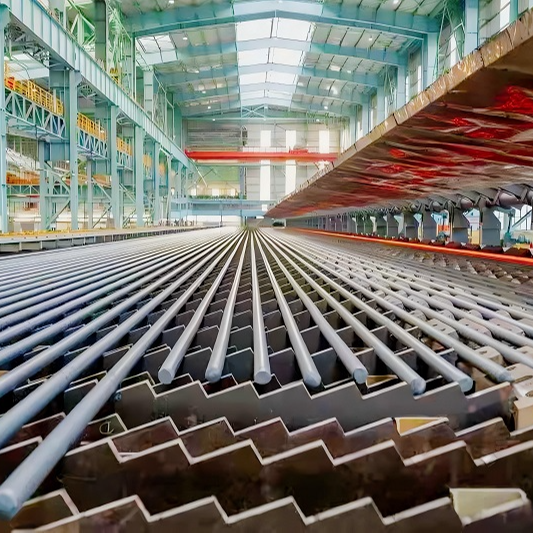
The company offers a comprehensive range of steel products, including Hot Rolled Steel Plate, Cold Rolled Steel Sheet, Galvanized Steel Sheet, Prepainted Steel Coil, and Corrugated Steel Sheet, widely used in building structures, roofing systems, and industrial equipment manufacturing. In addition, Foshan Sandstorm Steel supplies structural materials such as Structural Steel Beam, Steel H Beam, Steel I Beam, Steel Angle Bar, Steel Channel Section, and Steel Flat Bar, providing strong and stable support for construction and infrastructure projects.
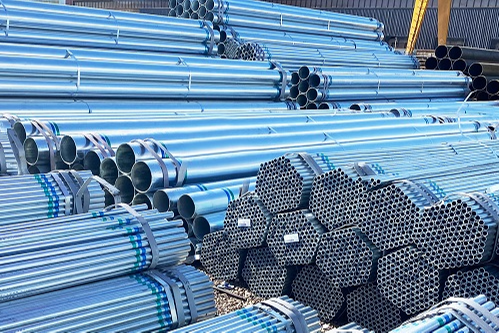
To meet the needs of fabrication, mechanical engineering, and construction industries, the company also provides various steel pipe and section products including Steel Square Tube, Steel Rectangular Tube, Steel Round Pipe, Seamless Steel Pipe, and Welded Steel Pipe. Complementing these are advanced structural materials such as Cold Formed Steel Section and High Strength Structural Steel, designed to offer excellent load-bearing performance and durability. With competitive pricing, efficient logistics, and professional customer service, Foshan Sandstorm Steel Co., Ltd. continues to build long-term partnerships with distributors, contractors, and industrial clients worldwide.
Implementation of ISO 9001 quality management across all rolling, cutting, and galvanizing lines. Every batch undergoes ultrasonic flaw detection, tensile yield testing, and dimensional verification per ISO/EN specs.
Located in Foshan’s prime metal cluster near Nansha and Shekou ports, providing seamless containerized and break-bulk global shipping with anti-rust oiling, waterproof plastic wrapping, and steel strap bundle protection.
Capabilities include secondary fabrication services: laser cutting, precision length sawing, automated punching, beveling, robotics grinding, continuous hot-dip galvanizing, and custom cold-roll tooling design.
Evaluating international manufacturers based on rolling precision, export capacity, compliance standards, and structural steel versatility.
Core Strengths: Integrated hub supply, wide portfolio of structural steel beams, channel sections (UPN, UPE, C-Channel), high-precision cold-formed sections, customized anti-corrosion galvanizing, and direct mill export logistics.
Key Markets: Southeast Asia, Middle East, South America, Europe, Australia.
Core Strengths: Comprehensive global structural section footprint, pioneer in low-carbon steel (XCarb), broad compliance with EN, ASTM, and JIS specifications, heavy UPE structural sections.
Key Markets: North America, Europe, Global EPC Mega-projects.
Core Strengths: World’s largest crude steel producer, extensive hot-rolling capabilities, advanced metallurgy in high-strength low-alloy (HSLA) structural channel sections, high volume capacity.
Key Markets: Global distribution network, infrastructure & civil works.
Core Strengths: World-class precision rolling, specialized seismic-resistant structural channels, premium grade corrosion-resistant coatings (ZAM), strict metallurgical tolerance control.
Key Markets: East Asia, Asia-Pacific, High-spec infrastructure.
Core Strengths: PosMac advanced zinc-magnesium-aluminum coated cold-formed channels, exceptional structural stability for solar PV mounting frames, high-yield steel section technology.
Key Markets: Global renewable energy sector, automotive, shipbuilding.
Core Strengths: Celsius® and Advance® section series, leading UK manufacturer of parallel flange channels (PFC), deep technical engineering design support for building frameworks.
Key Markets: United Kingdom, Europe, South Asia.
Core Strengths: Global leadership in ultra-high-strength steel sections, Strenx® structural channels for weight minimization in heavy transport equipment and mobile crane frames.
Key Markets: Europe, North America, Heavy OEM Manufacturing.
Core Strengths: High-end industrial channel sections, continuous roll-forming engineering, precision surface treatment, strict European DIN/EN certification.
Key Markets: European industrial fabrication, mechanical engineering.
Core Strengths: Largest North American structural steel producer, Electric Arc Furnace (EAF) recycled steel manufacturing, wide selection of ASTM A36 and A572 C-Channels and MC profiles.
Key Markets: United States, Canada, Mexico commercial building.
Core Strengths: Fully integrated raw material to finished section supply, robust heavy UPN profiles for severe climatic conditions and mining support structures.
Key Markets: Eurasia, Industrial construction, Mining infrastructure.
Understanding the technological maturity, raw material integration, and cost efficiencies of China's primary metal processing center.
Foshan stands as China's preeminent metal distribution and processing capital. The close geographical concentration of raw hot-rolled strip steel mills, cold-rolling facilities, hot-dip galvanizing plants, and CNC fabrication workshops eliminates intermediate freight costs and drastically shortens production lead times.
Modern Chinese exporters utilize automated multi-stand continuous roll-forming lines integrated with inline flying shear equipment and optical laser measurement sensors. This guarantees web-to-flange squareness within ±0.5° and straightness deviation under 1mm per meter.
Chinese steel mills offer unprecedented order flexibility. Whether a client requires 500 tons of standardized EN 10279 UPE 200 channels in standard 12-meter lengths or highly tailored pre-punched C-purlins cut to 5.8-meter container lengths, production can be adapted seamlessly without exorbitant setup surcharges.
Decarbonization, BIM integration, high-strength micro-alloying, and intelligent automated processing.
Environmental Product Declarations (EPDs) have become mandatory in international tenders. Leading mills are adopting Electric Arc Furnaces (EAF) powered by renewable energy and scrap recycling, reducing embodied carbon dioxide equivalent ($CO_2e$) per ton of structural steel by over 60% compared to traditional Blast Furnace routes.
Transitioning from traditional structural carbon grades (S235 / A36) to High-Strength Low-Alloy steel grades (S355, S460, ASTM A572 Gr 50) allows engineers to reduce structural thickness by 15-25% while preserving identical moment of inertia and load capacity, leading to dramatic transportation and crane erection cost savings.
Integration of 6-axis robotic edge grinding, plasma thermal cutting, and automatic laser hole punching ensures that structural channel profiles arrive on job sites ready for immediate bolt-up assembly, entirely bypassing labor-intensive field modifications.
How global contractors deploy structural channel sections across diverse infrastructure environments.
Challenge: Utility-scale solar projects in desert environments demand high resistance to sand abrasion, dynamic wind forces, and severe thermal cycles.
Solution: Cold-formed C-purlins coated with 275 g/m² Hot-Dip Galvanizing or Zinc-Aluminum-Magnesium alloy. Pre-punched slots allow rapid mounting of PV modules and dynamic single-axis tracker torque tubes.
Challenge: High-rise commercial towers require wind-load support framing capable of handling structural deflection while preserving narrow sightlines.
Solution: Precision UPE parallel flange channels in S355J2 grade. The parallel flanges enable flush mechanical fastening of aluminum transoms and mullions without requiring tapered washers.
Challenge: Commercial vehicle manufacturers require lightweight yet fatigue-resistant channel profiles capable of withstanding dynamic twisting and impact loads.
Solution: Hot-rolled ASTM C10x30 or custom cold-formed C-channels engineered from S460MC high-yield automotive structural steel, decreasing tare weight while maximizing payload capacity.
Challenge: High cyclic crane wheel loads require high web shear resistance and stiff horizontal flanges to prevent lateral torsional buckling.
Solution: Heavy UPN 300 to UPN 400 profiles combined with top horizontal channel reinforcement caps, providing dynamic lateral stiffness for overhead traveling gantry cranes.
Key technical parameters global buyers must evaluate prior to issuing Purchase Orders for structural channel sections.
Ensure certification complies with EN 10204 Type 3.1 or 3.2. MTC must explicitly detail heat numbers, chemical ladle analysis ($C, Si, Mn, P, S, Cr, Ni, Cu$), yield strength ($R_{eH}$), tensile strength ($R_m$), elongation ($A_5$), and Charpy V-notch impact energy at designated temperatures ($0^\circ\text{C}$ or $-20^\circ\text{C}$).
Verify compliance with EN 10279 for European sections or ASTM A6/A6M for American sections. Key parameters include height tolerance ($\pm 1.5\text{mm}$ to $\pm 3.0\text{mm}$ depending on depth), flange width tolerance, web thickness variation, and out-of-squareness ($k + k_1$).
For corrosive environments (C3 to C5 categories according to ISO 12944), specify Hot-Dip Galvanizing according to ISO 1461 or ASTM A123. Require minimum coating weight of $610 \text{ g/m}^2$ (approx. $85 \mu\text{m}$ thickness) for long-term atmospheric durability.
Addressing core engineering, structural calculation, and international supply chain questions.
Discover our complementary structural steel profiles, piping systems, and advanced metal finishing tools.
 Sandstorm Steel